

What Defines Safe Dog Collars: A Pet Owner's Guide
A safe dog collar is defined by four non-negotiable characteristics: proper fit, durable materials, built-in safety features like quick-release buckles, and a design matched to your dog’s specific behavior and breed. Most collar-related injuries, from chafing to strangulation, trace back to owners overlooking one of these four factors. Understanding what defines safe dog collars protects your pet every single day, not just during walks. The right collar keeps your dog secure, comfortable, and identifiable without creating new risks in the process.
What defines safe dog collars and why it matters
Collar safety is the industry term veterinarians and trainers use to describe the intersection of fit, material quality, hardware function, and appropriate use context. A collar that scores well on all four counts prevents the most common collar-related incidents: escape, entanglement, tracheal pressure, and skin damage. The features of safe dog collars are not marketing language. They are measurable, testable criteria with real consequences when ignored.
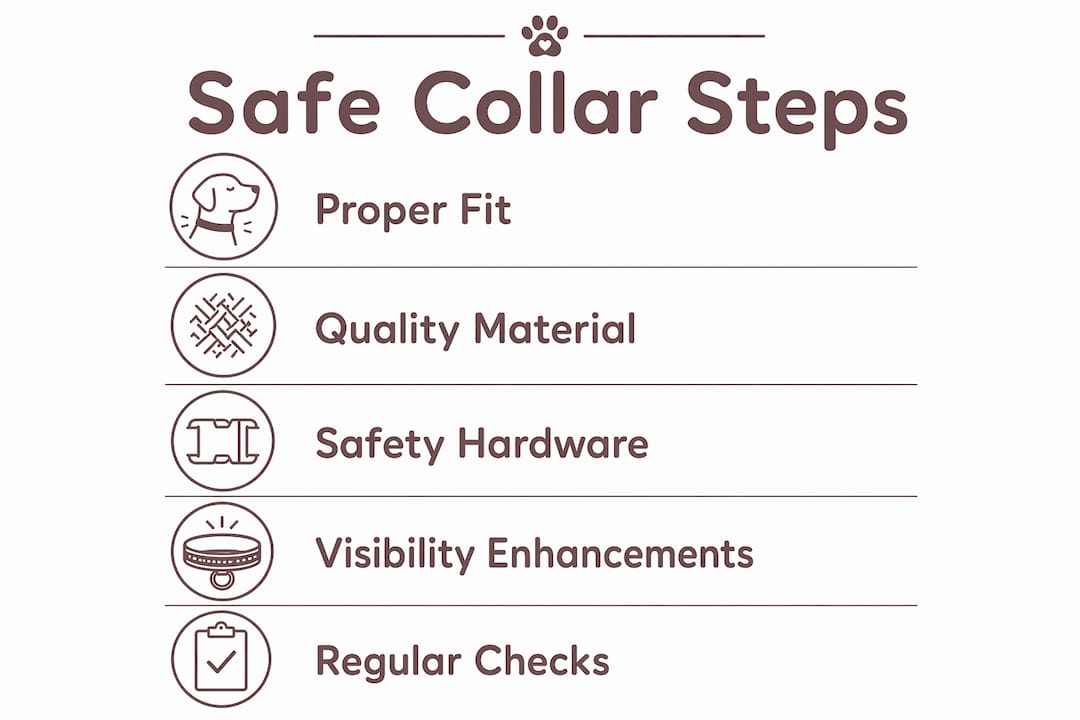
The two-finger rule is the foundational standard in veterinary safety guides. Two fingers fit snugly between the collar and your dog’s neck when the collar is properly sized. Too tight and you risk chafing, restricted breathing, and pressure sores. Too loose and your dog can slip free or catch the collar on furniture, fencing, or crate wire. Both failure modes are preventable with a 10-second check.
Material quality determines how long a collar holds its safety properties. Nylon and leather are the two most proven options among the best materials for dog collars. High-quality nylon resists fraying, holds hardware securely, and tolerates moisture without degrading quickly. Full-grain leather softens over time without losing structural integrity. Cheap alternatives, including thin polyester weaves or low-grade plastic hardware, fail faster and create snag and breakage risks that a quality collar avoids entirely.
How to get the fit right every time
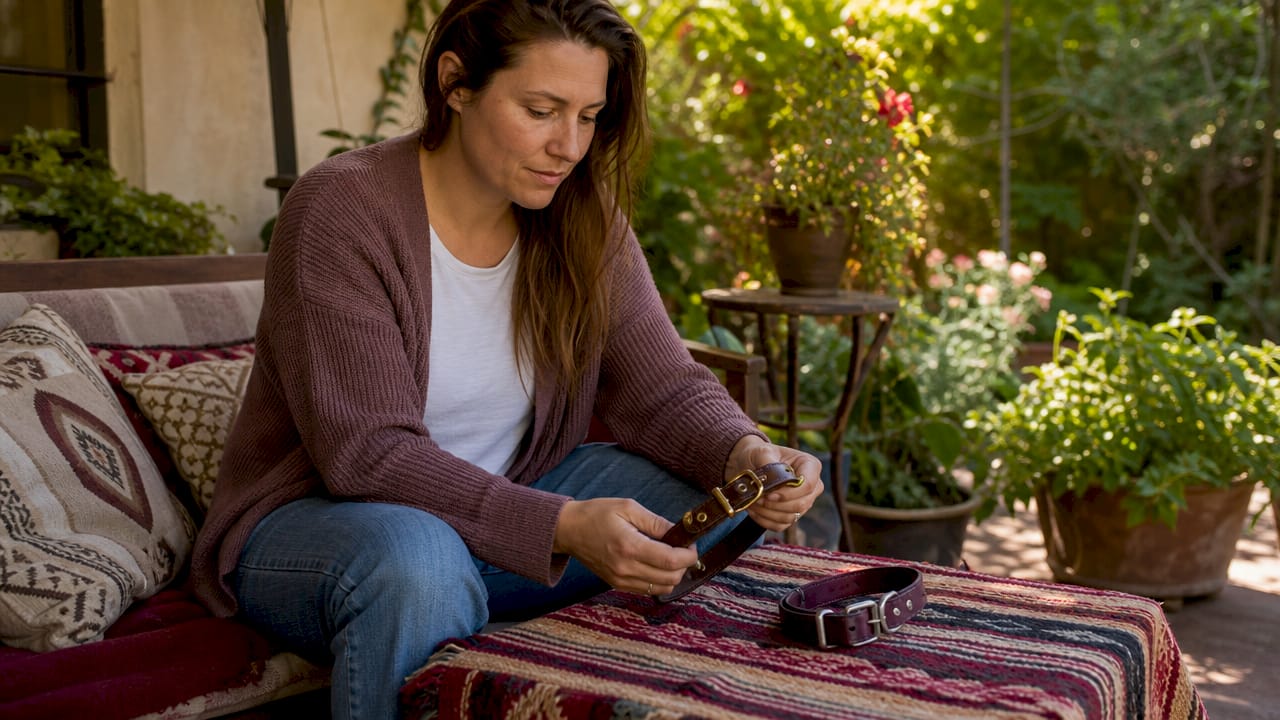
Measuring your dog’s neck circumference is the starting point for any collar purchase. Use a soft tape measure and wrap it around the base of the neck, where the collar will actually sit. Add one to two inches of breathing room to that measurement before selecting a collar size. After fastening the collar, apply the two-finger fit check to confirm the gap is present but not excessive.
Signs of an improperly fitted collar are easy to miss until they become serious. Watch for these indicators:
- Coughing or gagging during or after walks (collar too tight)
- Hair loss or redness around the neck (friction from a tight or rough collar)
- The collar spinning freely around the neck (collar too loose)
- Your dog pawing at the collar repeatedly (discomfort from pressure or fit)
Fit is not a one-time check. Puppies grow fast, and even adult dogs gain or lose weight seasonally. A collar that fit perfectly in spring may be dangerously tight by fall. Monthly fit checks take less than a minute and catch problems before they cause harm.
Pro Tip: Mark your calendar for the first of each month as a collar check reminder. While you are at it, inspect the buckle, D-ring, and stitching for any early signs of wear.
What safety features and materials actually matter
Quick-release buckles and breakaway mechanisms are the two hardware features that most directly prevent serious injury. Quick-release buckles allow a collar to be removed instantly if your dog gets snagged on a fence post, tree branch, or piece of furniture. Breakaway collars go one step further. The clasp snaps open under sustained pressure, which means the collar releases automatically if your dog gets caught while unsupervised.
Reflective stitching and LED collar attachments improve visibility during early morning or evening walks. This is not a luxury feature. Dogs hit by vehicles at night are frequently wearing collars with no reflective properties at all. Reflective nylon collars from brands that specialize in outdoor pet gear address this gap without adding bulk or weight.
Here is a breakdown of the most common collar materials and how they compare on safety-relevant criteria:
| Material | Durability | Water resistance | Comfort | Best use case |
|---|---|---|---|---|
| Nylon | High | Moderate to high | Good | Everyday wear, active dogs |
| Leather | High | Low to moderate | Excellent (broken in) | Adult dogs, low-moisture environments |
| Biothane | Very high | Excellent | Good | Water dogs, heavy outdoor use |
| Rope/braided | Moderate | Low | Good | Light use, fashion-forward owners |
Hardware quality matters as much as the collar material itself. Stainless steel and solid brass D-rings and buckles resist corrosion and hold their strength under pressure. Zinc alloy and painted hardware corrode faster and can fail at the worst moment. When you are evaluating how to choose safe dog collars, flip the collar over and check the hardware stamp or finish before buying.
Monthly inspections are part of responsible collar ownership. Frayed nylon or cracked leather signals that a collar has reached the end of its safe service life. Replace it before it fails, not after.
Matching collar type to your dog’s behavior and breed
Not every dog needs the same collar, and using the wrong type creates risks that a well-made collar cannot fix. The collar type decision starts with an honest assessment of your dog’s behavior on leash and at rest.
Flat collars work well for calm dogs that walk without pulling and have no history of slipping their collar. They are the simplest option and the easiest to fit correctly. For dogs that pull consistently, a flat collar concentrates force directly on the trachea and cervical spine. Repeated collar pressure from chronic pulling contributes to tracheal damage and respiratory problems over time. A front-clip harness distributes that force across the chest and shoulders instead.
| Collar/harness type | Best for | Avoid if |
|---|---|---|
| Flat collar | Calm walkers, ID tag use | Dog pulls hard or has neck issues |
| Martingale collar | Sighthounds, escape artists | Dog is a strong puller |
| Front-clip harness | Pullers, brachycephalic breeds | Dog has shoulder injuries |
| Breakaway collar | Unsupervised or crate wear | Used as primary walk collar without check |
Martingale collars tighten slightly when a dog pulls back but stop before choking. Martingales prevent escape without the risks of a slip collar, making them the standard recommendation for Greyhounds, Whippets, and other sighthound breeds whose narrow heads allow flat collars to slide off. They are also useful for any dog with a history of backing out of collars.
Brachycephalic breeds including Bulldogs, Pugs, and French Bulldogs require special attention. Their compromised airways make any sustained neck pressure a genuine respiratory risk. Harnesses are the primary recommendation for these breeds, with collars reserved for ID tag use only. If you own a designer collar for a Pug, treat it as identification hardware, not a leash attachment point. You can read more about collar fit by breed to understand how size and anatomy shape the right choice.
Choke chains, prong collars, and slip leads carry real injury risk when used without professional guidance. None of these belong in the hands of a first-time dog owner without direct instruction from a certified trainer.
Pro Tip: If your dog pulls on leash, pair a front-clip harness for walks with a lightweight flat collar for ID tags. You get the safety benefits of both without compromising either function.
Safe collar habits: when to remove, inspect, and replace
Collar safety depends as much on daily habits as on product quality. Remove the collar before crating every single time, without exception. Crate wire creates snag points that can trap a collar and cause strangulation within minutes, even with a well-fitted collar. This is one of the most preventable collar-related fatalities in domestic dogs.
Follow this routine to keep collar use safe across your dog’s daily schedule:
- Remove the collar before every crating session, regardless of duration.
- Remove the collar at night if your dog sleeps unsupervised or in a confined space.
- Inspect the collar weekly for fraying, cracking, loose stitching, or corroded hardware.
- Check the fit monthly using the two-finger rule, especially after any weight change.
- Replace the collar every one to two years, or immediately if any structural damage appears.
Dangling tags and hardware create entanglement risks that are separate from the collar itself. A tag that catches on a crate bar or fence link can trap a dog just as effectively as a snagged collar. Use a tag silencer or flat tag engraved directly onto the collar to reduce this risk. Slide-on tags and embroidered name collars eliminate the dangling hardware problem entirely.
Breakaway collars are the one exception to the removal rule for unsupervised time. They are designed to release under pressure, which makes them safer than standard collars when your dog is alone. However, breakaway collars can open accidentally during a strong leash pull, so always confirm the clasp is fully engaged before attaching a leash for a walk.
Pro Tip: Keep a spare collar in your car or dog bag. If a collar fails or gets wet and needs drying, you always have a safe backup ready without leaving your dog unidentified.
Key takeaways
A safe dog collar requires correct fit, quality materials, functional safety hardware, and a design matched to your dog’s behavior. No single feature compensates for a gap in another.
| Point | Details |
|---|---|
| Fit is the foundation | Apply the two-finger rule at fitting and recheck monthly to catch changes early. |
| Material and hardware quality | Choose nylon, leather, or Biothane with stainless steel or brass hardware for lasting safety. |
| Quick-release and breakaway features | Quick-release buckles prevent snag injuries; breakaway collars add protection during unsupervised time. |
| Match collar type to your dog | Use martingales for sighthounds, harnesses for pullers and brachycephalic breeds, flat collars for calm walkers. |
| Remove before crating | Always take the collar off before crating to eliminate strangulation risk from wire snags. |
Why collar safety is simpler than most owners think
Most collar injuries I have seen described in veterinary case reports share one thing in common: the owner knew the collar was not quite right but kept using it anyway. The collar was a little loose. The buckle was a little worn. The dog had started coughing on walks but the owner assumed it was allergies. Collar safety is not complicated. It gets complicated when people treat it as a one-time purchase decision rather than an ongoing practice.
The insight I find most underappreciated is that collar safety is as much about routine care as it is about the product itself. A premium collar worn incorrectly or left on during crating is more dangerous than a basic collar used with discipline and awareness. The two-finger rule, the monthly check, the pre-crate removal. These habits cost nothing and prevent the injuries that cost everything.
I also think the harness conversation gets avoided too often. Owners feel attached to collars as the default tool, but for pullers and short-nosed breeds, a safe harness fit is genuinely the safer choice. Using a collar as an ID holder and a harness as the leash attachment is not overcomplicating things. It is using the right tool for each job.
The dogs most at risk are not the ones with bad collars. They are the ones with owners who stopped paying attention after the first fitting.
— Christopher
Find collars built with safety at the center
At Americanbarkbliss, every collar in the lineup is built around the safety criteria covered in this guide. The quick-release nylon collar combines an adjustable fit, durable nylon construction, and a fast-release buckle in one product designed for everyday use. For owners who want craftsmanship alongside function, the hand-braided Fishtail collar delivers quality materials and a secure fit in a design that stands out. All products are made in the USA and selected to meet the safety standards dog owners actually need. Browse the full collar collection at Americanbarkbliss and find the right fit for your dog today.
FAQ
What is the two-finger rule for dog collars?
The two-finger rule means you should be able to slide two fingers snugly between the collar and your dog’s neck after fastening. This standard confirms the collar is neither tight enough to restrict breathing nor loose enough to allow escape.
When should I remove my dog’s collar?
Remove the collar before every crating session and during unsupervised nighttime rest. Crate wire creates snag points that can trap a collar and cause strangulation quickly, making removal a non-negotiable safety habit.
What collar type is safest for dogs that pull on leash?
Chronic pullers should use a front-clip harness rather than any collar for leash attachment. Collar pressure from pulling concentrates force on the trachea and cervical spine, contributing to tracheal damage and respiratory problems over time.
Are breakaway collars safe for walks?
Breakaway collars are designed for unsupervised wear, not primary walk use. The clasp can open accidentally under strong leash tension, so always verify the closure is fully engaged and consider a standard quick-release collar for leashed activity.
How often should I replace my dog’s collar?
Replace a collar every one to two years under normal use, or immediately if you notice fraying, cracking, or corroded hardware. Damaged collars are structural hazards that can fail at the moment your dog needs the most secure hold.
Leave a comment