

Safe Pet Toys: Examples Every Dog Owner Should Know
Not every toy on a pet store shelf deserves a spot in your dog’s collection. The market is full of products that look fun but contain toxic dyes, weak seams, or small parts that break off and become choking hazards. Knowing the right examples of safe pet toys, what materials pass the test, and which designs to avoid can mean the difference between enrichment and an emergency vet visit. This guide walks you through everything: the criteria that matter, specific toy types worth buying, and how to match the right toy to your individual dog.
Table of Contents
- Key takeaways
- 1. Key criteria for evaluating safe pet toys
- 2. Natural rubber toys
- 3. Food-grade silicone toys
- 4. Rope toys
- 5. Treat-dispensing puzzle toys
- 6. Eco-friendly toys from sustainable materials
- 7. Soft plush toys (with safety caveats)
- 8. Comparing toy types: a quick safety reference
- 9. How to match safe toys to your dog’s individual needs
- My honest take on toy safety as a pet product writer
- Find safe, durable toys your dog will actually love
- FAQ
Key takeaways
| Point | Details |
|---|---|
| Size matters most | Toys should exceed 3 inches in diameter to prevent swallowing in most breeds. |
| Material certification counts | Look for FDA food-grade or ASTM F963 compliance to confirm non-toxic construction. |
| Match toy to chewing style | A toy that works for a gentle chewer can be dangerous for an aggressive one. |
| Replace worn toys quickly | Damaged toys with exposed stuffing or missing chunks create real ingestion hazards. |
| Rotate toy types regularly | Cycling through chew, tug, and puzzle toys keeps dogs safe and mentally engaged. |
1. Key criteria for evaluating safe pet toys
Before you look at specific toy examples, you need a reliable checklist for sorting safe options from risky ones. The pet toy industry does not have mandatory federal safety standards the way children’s toy makers do, which means the responsibility falls on you.
Size is the first filter. Toys must exceed 3 inches in diameter to be considered safe for most breeds. Anything smaller than your dog’s open mouth is a swallowing risk.
Material quality separates safe toys from harmful ones. The gold standard indicators are FDA food-grade certification and ASTM F963 compliance, which means the toy has been tested against toxic substances including lead, cadmium, phthalates, and BPA. You can check product descriptions or contact manufacturers directly.
Here are the features that should disqualify any toy immediately:
- Loose buttons, googly eyes, or plastic attachments that detach easily
- Thin synthetic stuffing or polystyrene beads that spill out through poorly sewn seams
- Embedded squeakers with no reinforcement layer protecting them
- Toys painted with unknown dyes or coatings
Durability must match your dog’s chewing intensity. A soft plush toy is fine for a senior Maltese but a liability for a young Labrador. The right toy size and durability should match your dog’s chewing strength and play style. Our detailed breakdown on non-toxic dog toys covers approved materials in more depth.
Pro Tip: Run your thumbnail firmly across any toy seam before buying. If the stitch pulls away easily in the store, it will fail fast at home under real chewing pressure.
2. Natural rubber toys
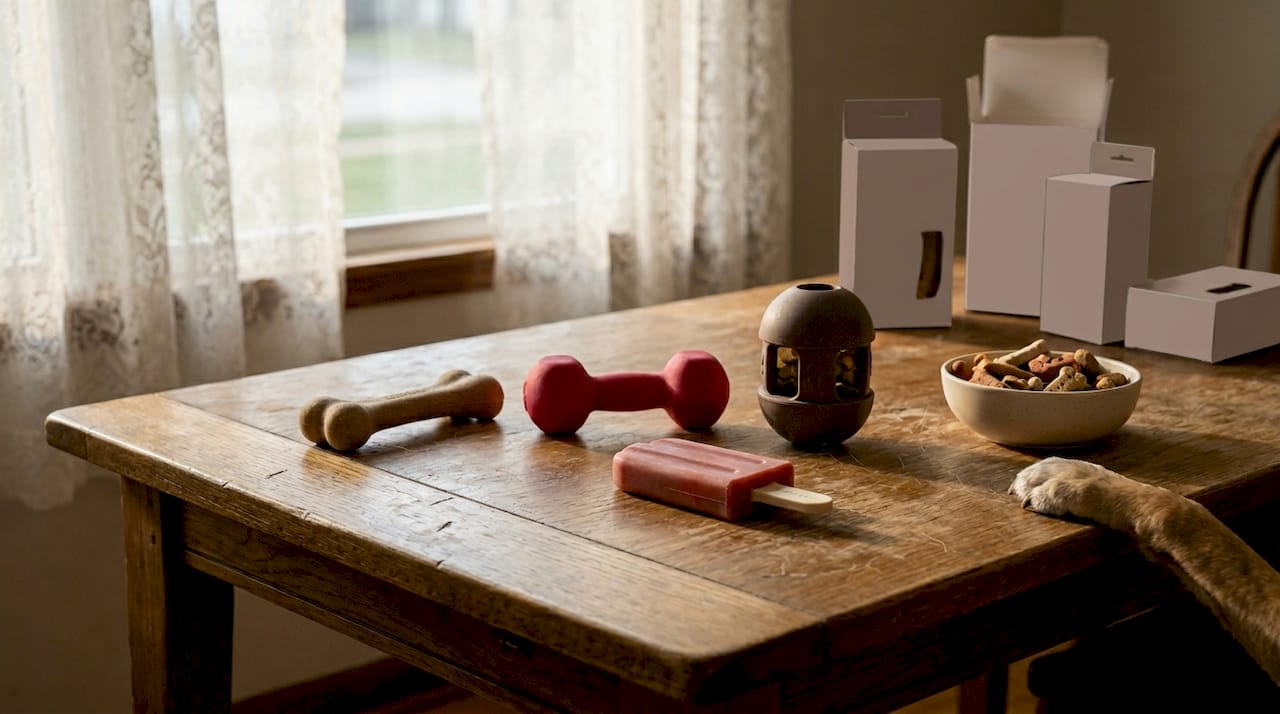
Natural rubber is the most trusted material in the chew toy category. It is derived from rubber tree sap, making it inherently non-toxic. High-quality natural rubber chew toys are FDA food-grade certified and tested for chemical safety, giving you confidence that nothing harmful transfers during chewing.
The material has a functional advantage beyond safety. Natural rubber has enough give to protect tooth enamel while still being tough enough to hold up against strong jaws. It does not splinter, crack into sharp shards, or leave hard chunks that dogs can break off and swallow. That combination is rare.
You can find natural rubber in several formats: classic bone shapes, dumbbell designs, popsicle-style freezable toys, and rings. The freezable versions add a soothing element for teething puppies. Americanbarkbliss carries a freezable rubber toy made from 100% natural rubber that doubles as a teething aid when frozen with treats inside.
3. Food-grade silicone toys
Silicone occupies a similar safety tier to natural rubber. It is non-porous, which means bacteria and mold have nowhere to hide, and it can be washed in the dishwasher without degrading. Food-grade silicone toys are particularly well-suited for puppies and senior dogs whose teeth and gums need gentler contact.
The main limitation is durability under heavy chewing. Silicone is not the right choice for power chewers because it can tear. Use it for dogs with moderate chewing habits or during supervised sessions. Its texture also lends itself well to treat-dispensing designs, where small kibble pieces are tucked into ridges or pockets to create slow-feed enrichment.
4. Rope toys
Rope toys are a staple in most dog homes, and they do have real benefits. They support tug play, provide texture for teeth, and most dogs find them genuinely entertaining. The problem is quality variation. Low-quality ropes can fray into dangerous string fragments that cause intestinal blockages if swallowed.
The distinction between a safe and an unsafe rope toy comes down to weave density and fiber type. Look for tightly woven, thick rope made from cotton or natural fibers. Avoid ropes with fraying ends out of the box, metallic threads, or loose loops your dog’s teeth can catch on. Always supervise rope play and retire the toy the moment you see significant unraveling.
Pro Tip: Check the knot ends specifically. Loose knots unravel fastest and are where most of the fraying starts. A quality rope toy should have tight, finished knots with no loose threads.
5. Treat-dispensing puzzle toys
Puzzle toys sit at the intersection of mental enrichment and physical safety. The concept is simple: your dog works to extract food rewards by manipulating the toy, which slows eating, reduces boredom, and redirects chewing energy toward an appropriate target.
For safety, the key is choosing puzzle toys made from durable, non-toxic materials with no detachable components. Avoid designs with small rubber flaps, silicone plugs, or decorative pieces that a dog could chew off and swallow. The best options are single-body designs or toys where all parts are large and securely attached. The TPR interactive chew toy at Americanbarkbliss uses a detachable squeaker system designed for supervised play, combining treat fill capacity with physical engagement.
6. Eco-friendly toys from sustainable materials
The demand for eco-friendly pet toys made from recycled plastics and sustainably sourced rubber has grown significantly, and several brands have responded with genuinely safe, chemically clean products. Materials like West Paw’s Zogoflex, which is BPA-free, phthalate-free, latex-free, and FDA food-contact certified, show that sustainability and safety can coexist without compromise.
Natural jute is another material worth considering. It is plant-based, biodegradable, and soft enough for gentle chewers. The rustic jute squirrel toy from Americanbarkbliss is a good example: non-toxic, gentle on teeth, and made without synthetic dyes. Jute toys work best for light chewers or as enrichment companions for breeds that prefer carrying and snuggling toys over destroying them.
7. Soft plush toys (with safety caveats)
Soft plush toys get a bad reputation in safety discussions, and some of that is earned. The risks are real: squeakers inside plush toys are a common hazard for aggressive chewers. But written off entirely, plush toys lose their legitimate place in the right dog’s toy rotation.
Senior dogs, small breeds, and gentle chewers often use plush toys as comfort objects rather than chew targets. For these dogs, a well-constructed plush toy with reinforced seams, no button eyes, and no small attachments is a genuinely safe option. The rule is supervision and honest assessment of your dog’s play behavior. If your dog disembowels stuffed toys in under three minutes, plush is not the right choice.
8. Comparing toy types: a quick safety reference
Different toys serve different purposes, and their safety profiles vary. This comparison helps you make faster, smarter purchasing decisions.
| Toy type | Best for | Key safety advantage | Main risk |
|---|---|---|---|
| Natural rubber chew | Moderate to strong chewers | Non-toxic, won’t splinter | Choose correct size for your breed |
| Food-grade silicone | Puppies, seniors, gentle chewers | Bacteria-resistant, dishwasher safe | Can tear under heavy chewing |
| Rope toys | Tug play, medium chewers | Engages teeth and gums | Fraying creates ingestion hazards |
| Puzzle/treat dispenser | All breeds | Mental stimulation, slow feeding | Avoid designs with detachable small parts |
| Eco-friendly/jute | Gentle chewers, comfort seekers | Biodegradable, non-toxic dyes | Lower durability, not for power chewers |
| Soft plush | Senior, small, or gentle dogs | Comfort and emotional enrichment | Squeakers and seams require supervision |
The core tradeoff you are always balancing is durability against gentleness. A toy hard enough to stand up to aggressive chewing may cause dental fractures if your dog presses it against a molar at the wrong angle. A toy soft enough to be dental-safe may shred in minutes for a power chewer, creating ingestion risks. Neither extreme serves your dog well.
9. How to match safe toys to your dog’s individual needs
Even knowing all the best examples of safe pet toys, the wrong toy for your specific dog is still a problem. Here is a practical framework for making the right call.
- Assess chewing intensity first. Watch your dog for a few minutes with a toy you already own. Does it survive five minutes of focused chewing? Ten? Matching toy durability to actual chewing behavior is more accurate than guessing by breed alone.
- Factor in age and dental health. Puppies need gentler textures for teething. Senior dogs may have sensitive teeth that cannot handle very hard materials. The Betterbone soft chew toy is designed precisely for these needs, using natural ingredients without harsh additives.
- Rotate toy types every few days. Alternating chew, tug, and puzzle toys keeps dogs mentally engaged and prevents destructive chewing from boredom.
- Inspect toys weekly. Worn or damaged toys with broken parts, missing chunks, or exposed stuffing should come out of rotation immediately. A damaged toy is a hazard regardless of how safe it was when new.
- Supervise new toys. Give any new toy a trial period with you present. You will learn fast how your dog interacts with it and whether it holds up.
Pro Tip: For budget-conscious shoppers, natural rubber and eco-friendly chew toys often have a lower cost-per-use than cheap plush toys that fall apart in days. Spend more once rather than replacing unsafe options repeatedly.
Understanding why toy quality matters for your pet’s health and behavior is worth reading before your next purchase.
My honest take on toy safety as a pet product writer
I’ve spent years reviewing pet products and talking to dog owners about what actually happens in their homes. The pattern I keep seeing is that owners underestimate how fast a dog can compromise a toy.
In my experience, the biggest mistake is buying toys based on how they look rather than how they are built. A plush toy shaped like a bear is irresistible at the store. But if the eyes are plastic buttons sewn on with three stitches, that toy is a choking hazard waiting to happen for any dog with real chewing drive.
What I’ve found actually works is starting with material quality, then evaluating size and construction. A plain, well-made natural rubber ring is less visually exciting than a stuffed animal with a squeaker. But it will still be intact after six months, which means it was worth buying.
The other thing I’ve learned is that supervising play is not optional for new toys. You do not have to hover, but you should be in the room. Dogs figure out weak points in toys quickly, and catching a problem early prevents an emergency later. Prioritize safety within fun. They are not in conflict with each other.
— Christopher
Find safe, durable toys your dog will actually love
At Americanbarkbliss, the focus is on toys built to last without cutting corners on safety. You will find tug toys made from durable, dog-safe materials that handle serious play sessions, along with natural rubber chew options and interactive treat-dispensing toys designed for mental engagement. Every product is curated with real dog behavior in mind, not just shelf appeal. Whether your dog is a gentle senior or a relentless power chewer, Americanbarkbliss carries options that match their needs. Browse the full toy selection at americanbarkbliss.com and find something your dog will love safely.
FAQ
What makes a dog toy truly safe?
A safe dog toy uses non-toxic, certified materials, has no small detachable parts, and is sized appropriately so your dog cannot swallow it whole. Look for FDA food-grade or ASTM F963 compliance as baseline confirmation.
How do I know if a toy is too small for my dog?
Toys should exceed 3 inches in diameter for most breeds to prevent swallowing risks. If your dog can fit the entire toy in their mouth comfortably, size up immediately.
Are rope toys safe for dogs?
Rope toys can be safe when they are tightly woven from natural fibers and used under supervision. Low-quality ropes fray into string fragments that cause intestinal blockages, so retire any rope toy showing significant unraveling.
How often should I replace my dog’s toys?
Inspect toys weekly and replace any showing broken parts, exposed stuffing, or missing chunks. A damaged toy carries real injury risk regardless of how safe the original design was.
What toy materials should I avoid completely?
Avoid toys with unknown synthetic coatings, BPA or phthalate-containing plastics without certification, loose decorative parts, and thin stuffing held in by weak seams. Stick with natural rubber, food-grade silicone, or certified eco-friendly materials.
Leave a comment