

How to Choose Pet Bedding for Your Dog's Best Sleep
Choosing the right pet bedding means matching your dog’s size, sleep posture, health needs, and daily habits to a bed that supports comfort and safety. The industry term for this process is dog bed selection, and it covers everything from foam certifications like CertiPUR-US to fabric standards like OEKO-TEX Standard 100. Get it right and your dog sleeps better, sheds less stress, and stays healthier. Get it wrong and you’re replacing a flattened, smelly bed every six months. This guide walks you through every decision point so you can choose with confidence.
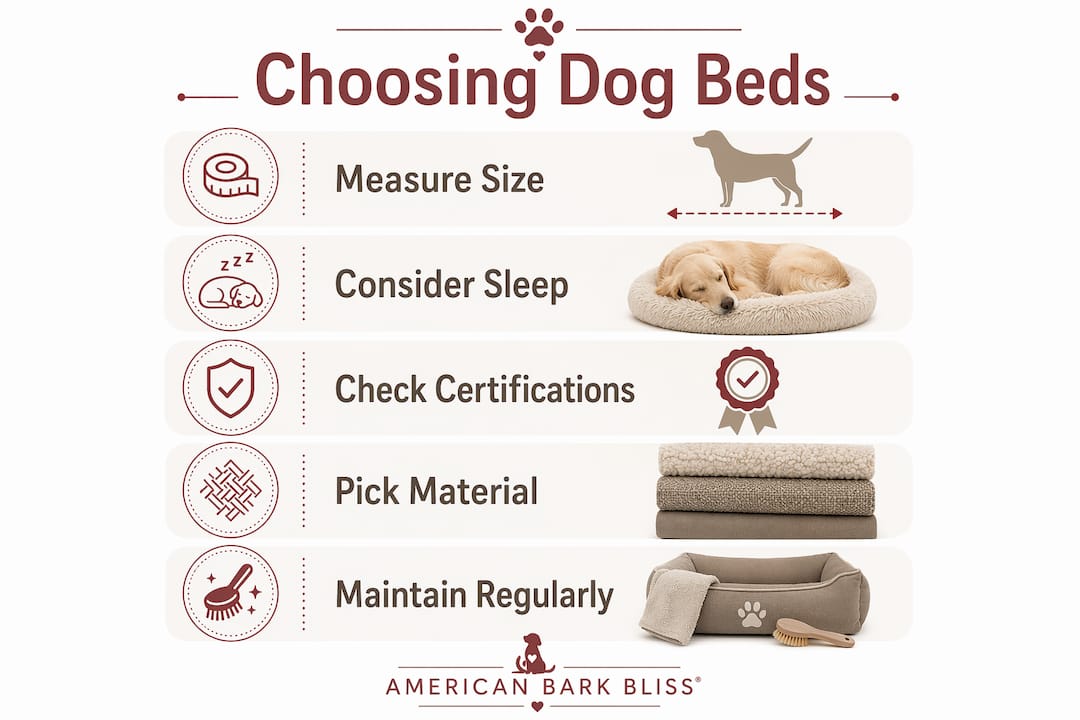
How to choose pet bedding by measuring your dog first
Size is the single most common mistake dog owners make when buying a bed. A bed that looks large enough in the store often proves too cramped once your dog stretches out at night.
The correct method is straightforward. Measure your dog while they are in their natural sleeping position, from nose to the base of the tail, then add 8 to 10 inches to that number. That extra length gives your dog room to reposition without rolling off the edge. If the result falls between two standard sizes, always round up.
Pro Tip: Take the measurement twice: once when your dog is curled and once when they are fully stretched. Use the longer number as your baseline. Dogs shift positions throughout the night, and the bed needs to accommodate both.
A bed that is too small forces your dog into uncomfortable postures that strain joints over time. A bed that is excessively large can feel insecure to smaller or anxious dogs who prefer a snug, enclosed space. Neither extreme serves your dog well.
Consider placing multiple beds in different areas of your home:
- A smaller, cozier bed in the bedroom for nighttime sleep
- A flat, larger mat near the living room couch for daytime napping
- A waterproof option near the back door for post-walk rest
This approach lets your dog choose the right surface for their mood and activity level throughout the day.
What sleep posture tells you about choosing dog bed types
Your dog’s preferred sleep position is the clearest signal for which bed shape to buy. Four distinct sleeper types each point to a different bed design, and matching them correctly makes a real difference in how much your dog actually uses the bed.
- Curlers tuck their nose toward their tail in a tight circle. These dogs thrive on donut or contour beds with raised, rounded edges that mirror their natural posture.
- Burrowers dig under blankets and push into corners. Cave-style beds with a hood or covered top satisfy this instinct and reduce anxiety in nervous dogs.
- Sprawlers sleep flat on their side or belly with legs extended. A flat mattress or large rectangular pad gives them the open surface they need without any obstruction.
- Leaners press their back or head against a wall or furniture. Bolster beds with a firm raised edge on one or more sides replicate that support and help these dogs feel grounded.
Behavioral considerations matter beyond just shape. A dog that chews compulsively needs a bed with reinforced stitching and durable outer fabric, regardless of sleep style. A dog recovering from surgery may need a bolster bed with low entry points so they can step in without jumping. You can explore bed types by sleep style to see how these categories translate into specific product designs.
Material preferences also vary by dog. Short-coated breeds like Boxers and Greyhounds often prefer plush, soft surfaces because they lack the insulating undercoat that keeps them warm. Double-coated breeds like Huskies and Bernese Mountain Dogs tend to prefer cooler, breathable fabrics like cotton canvas.
Are certifications actually worth checking for pet bedding safety?
Yes, and the difference between a certified and uncertified bed is not marketing. It is measurable chemistry.
CertiPUR-US certification means the foam inside a bed has been tested for harmful chemicals and meets VOC emission standards below 0.5 parts per million. That matters because dogs spend 12 to 14 hours a day on their beds, often with their nose pressed directly into the surface. Low VOC emissions protect indoor air quality for both your dog and your household.
OEKO-TEX Standard 100 certifies the fabric cover for harmful substances, but it does not test the foam core. This is the detail most buyers miss. A bed can carry an OEKO-TEX label on its cover while containing uncertified foam underneath.
| Certification | What it covers | What it does not cover |
|---|---|---|
| CertiPUR-US | Foam core: chemicals, VOCs, heavy metals | Fabric covers, stitching, dyes |
| OEKO-TEX Standard 100 | Fabric and textile components | Foam fill, internal padding |
Checking certifications by component is the only reliable approach. A bed that carries both certifications on the appropriate parts is genuinely safer than one that carries only one or neither.
Pro Tip: Before buying, search the CertiPUR-US online directory directly at certipur.us to verify the foam brand. Do not rely on a retailer’s product description alone. Certification claims on packaging are sometimes outdated or misapplied.
Natural fibers like wool and sheepskin offer an alternative for owners who prefer non-synthetic materials. Wool is naturally antimicrobial and temperature-regulating, which makes it useful for dogs prone to skin irritation. However, natural fiber beds rarely carry standardized certifications, so sourcing from reputable domestic manufacturers matters more in that category.
Which materials hold up best for comfort, cleaning, and durability?
The right cover material depends on your dog’s biggest daily habit, not on what feels softest in your hand at the store. Matching material to your dog’s behavior produces better long-term results than prioritizing texture alone.
| Dog habit | Best cover material | Why it works |
|---|---|---|
| Heavy shedding | Microfiber suede or smooth polyester | Hair releases easily instead of embedding in fibers |
| Drooling or wetting | Quick-dry polyester or ballistic nylon | Moisture wicks away and dries fast between washes |
| Digging and scratching | Ballistic nylon or canvas | Resists tearing under repeated mechanical stress |
| Joint pain or senior dogs | Memory foam with firm base layer | Pressure relief and support prevent sinkage |
Fill material is equally important. Memory foam conforms to body shape and distributes weight evenly, which is why veterinarians recommend it for senior or arthritic dogs. The key detail is thickness. A foam layer under three inches tends to bottom out under larger dogs, eliminating the pressure relief benefit entirely. For heavy or senior dogs, foam thickness and rebound over time are the metrics that matter most.
Beds with removable, machine-washable covers are worth the slight price premium. A cover that cannot be removed forces you to wash the entire bed, which takes longer to dry and often leads to mildew in the fill. Waterproof liners between the cover and fill add another layer of protection for dogs that are incontinent or still being house-trained.
Bed surface reset speed is an underappreciated factor. Smooth cover textures re-fluff faster after use and accumulate less hair and debris between washes. This keeps the bed looking and smelling cleaner day to day, which matters if the bed lives in a shared living space.
How often should you wash your dog’s bedding?
Washing frequency is one of the most neglected parts of pet ownership, and the consequences go beyond odor. Pet bedding collects pollen, dust mites, dander, and bacteria at a rate that most owners underestimate.
Follow this maintenance schedule for best results:
- Shake out the bed outdoors every two to three days to remove loose hair, dirt, and surface debris before it works deeper into the fabric.
- Wash the cover every two to four weeks under normal conditions. During allergy seasons, increase this to every one to two weeks. Soaking in warm water with dish soap for 20 minutes before a full wash cycle removes pollen and allergen buildup more effectively than a standard machine wash alone.
- Wash the full bed insert once a month if it is machine-washable. Use a gentle, fragrance-free detergent. Fragranced products can irritate a dog’s sensitive respiratory system.
- Dry completely before returning to use. Damp fill material is a breeding ground for mold and bacteria. If the bed takes more than a few hours to dry, consider a replacement with faster-drying materials.
- Replace the bed entirely when the fill no longer rebounds after compression. A flat, non-resilient bed provides no support and can worsen joint problems in older dogs.
Pro Tip: Owning two beds for the same sleeping spot lets you rotate them during wash cycles. Your dog always has a clean, dry bed available, and neither bed wears out as quickly from daily use.
Regular hygiene also protects human household members, particularly anyone with pet allergies or asthma. A clean bed reduces the allergen load your dog carries from their sleeping area into the rest of the home. You can find a detailed step-by-step approach in this dog bed cleaning guide that covers both machine and hand-washing methods.
Key takeaways
Choosing the right dog bed requires matching size, sleep posture, certified materials, and a consistent cleaning routine to your individual dog’s needs.
| Point | Details |
|---|---|
| Measure before buying | Add 8 to 10 inches to your dog’s nose-to-tail length and round up to the next size. |
| Match shape to sleep style | Curlers need donut beds, burrowers need cave styles, sprawlers need flat mats, leaners need bolsters. |
| Verify certifications by component | Check CertiPUR-US for foam and OEKO-TEX Standard 100 for fabric separately before purchasing. |
| Choose material by dog habit | Match cover fabric to your dog’s biggest issue: shedding, drooling, digging, or joint support. |
| Wash every two to four weeks | Increase frequency during allergy season and always dry completely before reuse. |
What most pet owners get wrong about bedding
I’ve looked at hundreds of dog beds over the years, and the pattern I see most often is owners buying on softness. They squeeze the fill in the store, decide it feels luxurious, and bring it home. Six months later the foam has bottomed out, the cover is stained, and the dog is sleeping on the floor next to it.
The real evaluation criteria are certification, material behavior, and washability. A bed that carries both CertiPUR-US foam certification and an OEKO-TEX-certified cover is not just a marketing story. It represents a measurable reduction in chemical exposure for a dog that sleeps 12 to 14 hours a day with their face pressed into the surface.
I’ve also seen owners skip the size measurement entirely and eyeball it. The result is almost always a bed that is slightly too small, which forces the dog into compressed postures that strain the hips and shoulders over months of use. The orthopedic dog bed guide at Americanbarkbliss explains this well, particularly for senior dogs where the stakes are higher.
My honest recommendation: spend more time on the certification check and the size measurement than on the aesthetic. A bed that looks beautiful but lacks certified foam is a poor trade. Your dog cannot tell you it bothers them. The behavior changes, the restlessness, the reluctance to use the bed, those are the signals that show up weeks later. Buy right the first time.
— Christopher
Find the right bed at Americanbarkbliss
Americanbarkbliss carries a curated selection of dog beds built to the standards this guide covers, from certified foam fills to machine-washable covers in sizes from small to XL.

The Purr Padd R is a standout option for owners who prioritize both comfort and easy maintenance, with a design that suits a range of dog sizes and sleep styles. For dogs that need orthopedic support, the Body Glove Paintflower Pet Napper combines memory foam construction with a washable cover, addressing both joint health and hygiene in one product. Every bed in the collection is selected with American craftsmanship and your dog’s daily comfort in mind.
FAQ
How do I measure my dog for the right bed size?
Measure your dog from nose to the base of the tail while they are in their natural sleeping position, then add 8 to 10 inches. If the result falls between standard sizes, choose the larger option.
What certifications should I look for in a dog bed?
Look for CertiPUR-US certification on the foam and OEKO-TEX Standard 100 on the fabric cover. These are separate certifications covering different components, so verify each one independently.
How often should I wash my dog’s bed?
Wash the cover every two to four weeks under normal conditions, and increase to weekly during allergy season. Always dry the bed completely before returning it to use to prevent mold in the fill.
What bed type works best for dogs with joint pain?
Orthopedic memory foam beds with a firm base layer and at least three inches of foam thickness provide the best pressure relief for senior or arthritic dogs. Avoid beds that allow the dog to sink through to the base.
Does the cover material really matter for shedding dogs?
Smooth cover materials like microfiber suede or tight-weave polyester release shed hair far more easily than plush or looped fabrics. This reduces the time spent de-hairing the bed between washes and keeps the surface cleaner day to day.
Leave a comment