

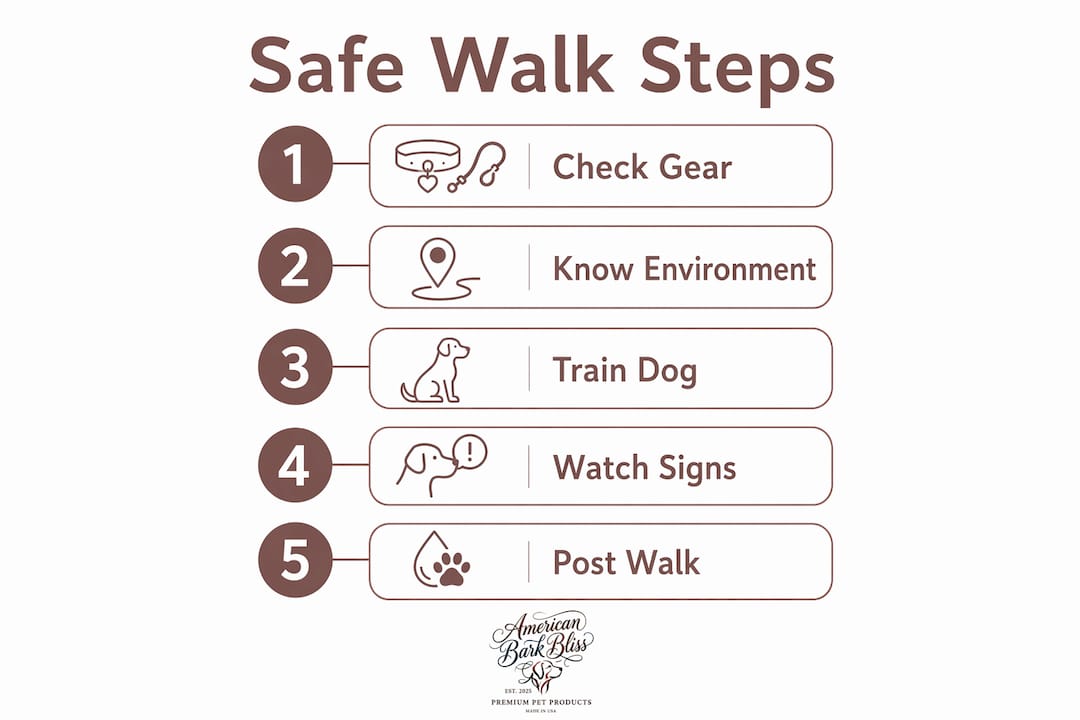
Dog Walking Safety Guide: Best Practices for 2026
TL;DR:
- Proper equipment, environmental awareness, and training are essential for safe dog walks. Most injuries are preventable through correct gear, route adjustments, and behavior training. Consistent training, such as loose-leash walking and command use, enhances safety and strengthens the bond between owner and dog.
A safe dog walk depends on proper equipment, environmental awareness, and consistent training that prepares your dog to respond calmly to distractions. This dog walking safety guide covers everything from gear selection and heat hazards to leash training and breed-specific precautions. The American Veterinary Medical Association and Tufts University both publish standards for dog exercise safety, and their guidance points to one clear truth: most walk-related injuries and health emergencies are preventable. Getting the basics right protects your dog and makes every outing more enjoyable for both of you.
What gear ensures the safest, most comfortable dog walks?
The right gear is the foundation of walking dogs safely. A poorly fitted collar or a flimsy leash creates control problems that no amount of training can fully fix.
Harnesses vs. collars
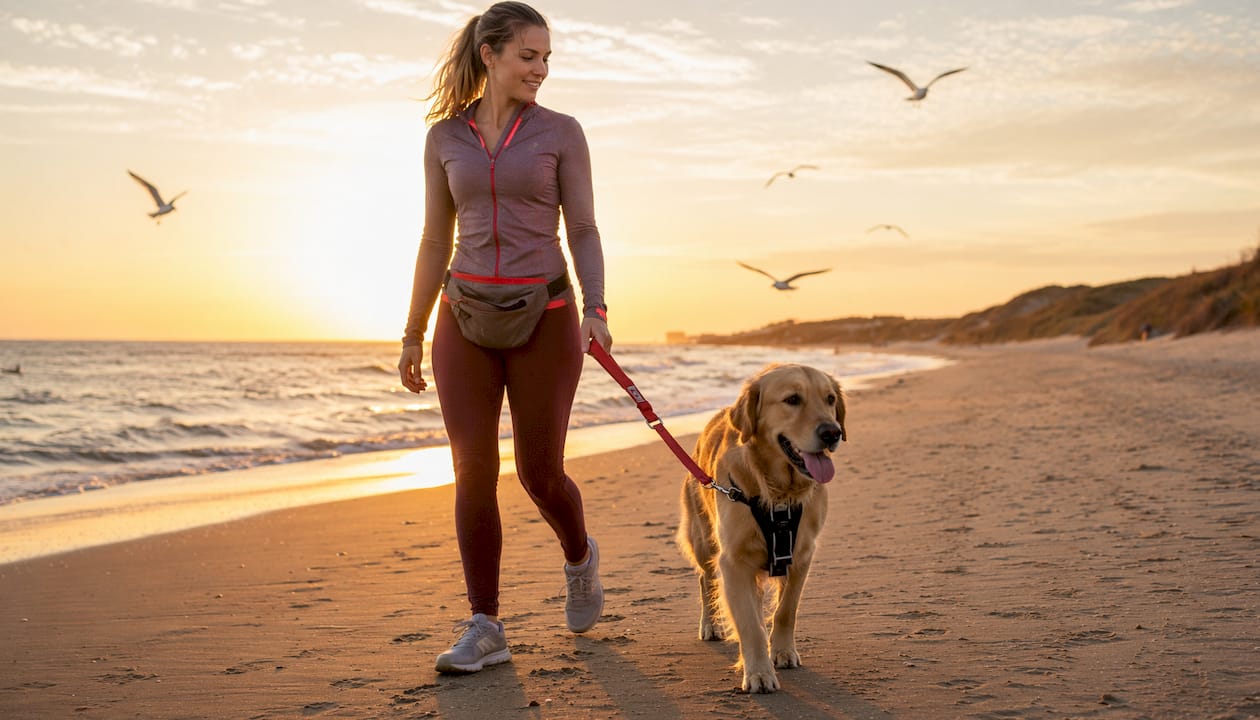
Front-clip harnesses distribute pressure across the chest rather than the throat, which reduces the risk of respiratory damage. A collar alone concentrates all pulling force on the trachea and cervical spine. For dogs that pull even occasionally, a no-pull or front-clip harness is the safer choice. The Tru-Fit Smart Dog Walking Harness from Americanbarkbliss offers adjustable straps, reflective stitching, and a quick-release buckle, which covers the three features that matter most for daily walks. For a deeper look at the tradeoffs, the harness vs. collar comparison on the Americanbarkbliss blog breaks down fit, control, and health impact by dog type.
Leash length and construction
Industry best practice recommends a 4–6 foot leash with a width between 1/2 and 3/4 inch for medium-sized dogs. That length gives you enough slack for natural movement while keeping your dog close enough to redirect quickly. A padded-grip nylon leash, like the 5-foot padded leash from Americanbarkbliss, reduces hand fatigue on longer walks and holds up to repeated use.
Retractable leashes pose real safety risks in traffic and crowded areas, including poor control, friction burns, and lacerations from the cord. The locking mechanism on most retractable models fails under sudden force. A standard static leash gives you immediate, reliable control in every situation.
Accessories that add safety
- Reflective gear: Reflective strips on harnesses and collars make your dog visible to drivers during early morning or evening walks.
- Water carrier: A collapsible bowl and a small water bottle prevent dehydration on walks longer than 20 minutes.
- GPS tag: A GPS-enabled ID tag gives you real-time location data if your dog slips free.
- Paw protection: Booties or paw wax protect against hot pavement, ice melt chemicals, and rough terrain.
Pro Tip: Check your dog’s harness and leash for fraying, cracked hardware, or loose stitching before every walk. Gear fails at the worst moments, and a 30-second inspection prevents most equipment-related accidents.
How do environmental conditions affect walking safety?
Environmental hazards cause more walk-related injuries than gear failures or behavioral issues combined. Knowing what to look for and when to adjust your route protects your dog year-round.
Heat and pavement burns
The 7-second rule is the fastest way to test pavement safety: place your hand flat on the surface for 7 seconds. If you pull away before the count is up, the surface is too hot for your dog’s paws. At an air temperature of 77°F, asphalt can reach 125°F, which causes tissue damage to paw pads in as little as 60 seconds. That is a burn risk most dog owners underestimate.
Avoid walking between 10 a.m. and 4 p.m. during summer months to reduce heat stroke risk. Early morning and evening walks keep pavement temperatures manageable and reduce sun exposure. Signs of heat stroke include heavy panting, excessive drooling, and a rapid heart rate. If your dog shows these signs, move to shade immediately and apply cool water to the paws, belly, and neck. Cooling must be gradual: ice-cold water causes peripheral vasoconstriction, which traps heat inside the body and worsens the condition.
Chemical hazards on lawns and sidewalks
Herbicides and pesticides on lawns absorb through paw pads and cause toxicity if your dog licks their feet after a walk. Freshly treated grass often has no visible warning signs. Steer clear of lawns with chemical applicator flags, and wipe your dog’s paws thoroughly after every walk. For more on reducing chemical exposure, the Americanbarkbliss guide on non-toxic pet products covers safer alternatives for home and outdoor use.
Seasonal and situational hazards
- Ticks: Check ears, armpits, and between toes after walks through grass or wooded areas, especially from april through october.
- Toad poisoning: In warm, wet climates, dogs that mouth or lick toads can experience rapid-onset toxicity. Keep your dog on leash near standing water at dusk.
- Ice melt chemicals: In winter, sodium chloride and calcium chloride-based ice melts irritate paw pads and are toxic if ingested. Rinse paws after every winter walk.
- Traffic and low visibility: Walk facing traffic when no sidewalk is available, and use reflective gear for any walk before sunrise or after sunset.
What training techniques keep dogs safe on walks?
Gear and environmental awareness only go so far. A dog that pulls, lunges, or ignores commands creates safety risks that no harness can fully eliminate. Consistent training is the third pillar of canine walking precautions.
Teaching loose-leash walking
- Start in a low-distraction area. Begin in your yard or a quiet hallway before moving to the street.
- Stop when the leash goes tight. The moment your dog pulls, stop walking completely. Forward movement only resumes when the leash goes slack.
- Reward the slack. The instant the leash loosens, mark the behavior with a verbal cue like “yes” and give a treat.
- Add distance gradually. Once your dog holds a loose leash for 10 steps, extend to 20, then 50, then a full block.
Rewarding slack-leash behavior builds lasting habits within 2–4 weeks of consistent daily practice. The key word is consistent: skipping sessions or allowing pulling on some days resets progress.
Commands that prevent incidents
“Leave it” and “watch me” are the two most useful commands for walk safety. “Leave it” redirects your dog away from food scraps, dead animals, or toxic plants on the ground. “Watch me” breaks your dog’s focus on a trigger and redirects attention back to you before a reaction escalates.
Dogs have more than 100 million scent receptors, which means every walk is a sensory event that competes with your cues. Teaching “leave it” gives you a reliable interrupt signal that works even when your dog is highly engaged with a smell or object.
Pro Tip: Practice “leave it” at home with low-value items before testing it on a walk. Dogs generalize commands faster when they learn them in a calm environment first.
Managing reactive dogs
Reactive dogs need distance from their triggers, not exposure to them. If your dog reacts to other dogs, cyclists, or strangers, identify the threshold distance at which your dog notices the trigger but stays calm. Work at that distance, reward calm behavior, and close the gap only when your dog is consistently relaxed.
Avoiding high-traffic peak hours reduces unpredictable encounters for reactive dogs. Early morning walks, before most people and dogs are out, lower the number of triggers your dog faces and make training sessions more productive. If reactivity is severe, a certified professional dog trainer or veterinary behaviorist can build a structured desensitization program.
What special considerations apply for different dogs?
Not every dog walks the same way. Age, breed, and temperament each require adjustments to your routine and gear.
Puppies and senior dogs
Puppies benefit from short, frequent walks focused on socialization rather than distance. Exposing a puppy to different surfaces, sounds, and people during the critical socialization window (roughly 3–14 weeks) builds confidence that pays off for years. Keep sessions under 15 minutes and end on a positive note.
Senior dogs need a gentler pace and more frequent rest stops. Joint stiffness is common in older dogs, and a harness that supports the chest and belly reduces strain on arthritic limbs. Watch for lagging, limping, or reluctance to continue, which are signs the walk is too long or the terrain too demanding.
Brachycephalic breeds
Bulldogs, French Bulldogs, Pugs, and Boston Terriers have compressed airways that make heat regulation difficult. These breeds overheat faster than other dogs and show distress with less exertion. Keep walks short during warm weather, avoid midday heat entirely, and carry water on every outing regardless of season.
Brachycephalic dogs can develop heat stroke at temperatures that feel comfortable to their owners. A 75°F morning walk that seems mild to you may be genuinely dangerous for a Pug or Bulldog. When in doubt, cut the walk short and cool your dog indoors.
Post-walk care
Post-walk hygiene is a non-negotiable part of best dog walking practices. Wipe paws with a damp cloth to remove chemicals, allergens, and debris. Check the coat and skin for ticks, especially after walks in grass or brush. Offer fresh water immediately and allow your dog to rest before feeding. A calm, predictable post-walk routine reduces anxiety and signals to your dog that the outing is complete.
For a full list of accessories that support pre-walk and post-walk routines, the Americanbarkbliss guide on must-have walking accessories covers gear for every stage of the outing.
Key takeaways
Safe dog walks require the right harness, environmental awareness, and consistent leash training to prevent injuries, heat emergencies, and behavioral incidents.
| Point | Details |
|---|---|
| Choose a front-clip harness | Distributes pressure across the chest, protecting the throat and improving control. |
| Apply the 7-second pavement rule | Test hot surfaces before every summer walk to prevent paw pad burns. |
| Train loose-leash walking daily | Rewarding slack-leash behavior builds reliable habits within 2–4 weeks. |
| Avoid peak heat hours | Walk before 10 a.m. or after 4 p.m. in summer to reduce heat stroke risk. |
| Adjust for your dog’s needs | Puppies, seniors, and brachycephalic breeds each require tailored walk length and pacing. |
What I’ve learned after years of watching dogs walk badly
Most dog walking injuries I’ve seen come from one of two sources: the wrong gear used with confidence, or the right gear used without any training to back it up. Owners switch to a harness and assume the problem is solved. It isn’t. The harness reduces physical strain, but the dog still needs to learn what the leash means.
The shift that changes everything is treating the walk as a training session, not just exercise. When you bring a handful of treats and practice “leave it” or “watch me” on every outing, the walk becomes a communication event. Your dog starts checking in with you instead of dragging you toward every distraction. That shift takes about three weeks of consistency, and the payoff is a dog that is genuinely safer in traffic, around other dogs, and in unpredictable situations.
Environmental awareness is the part most dog owners underestimate until something goes wrong. The pavement heat issue is real and underreported. I’ve seen dogs with blistered paw pads after a 15-minute walk on a summer afternoon because the owner felt fine in their sneakers. Your dog cannot tell you the ground is burning. You have to check.
The bond that builds from mindful, safety-focused walks is worth more than the extra effort. A dog that trusts your cues and walks calmly beside you is a dog that is genuinely happy to be out with you.
— Christopher
Walk safer with Americanbarkbliss gear
Every walk is safer when your gear is built for the job. Americanbarkbliss carries American-made harnesses, collars, and leashes designed to hold up to daily use while keeping your dog comfortable and visible.
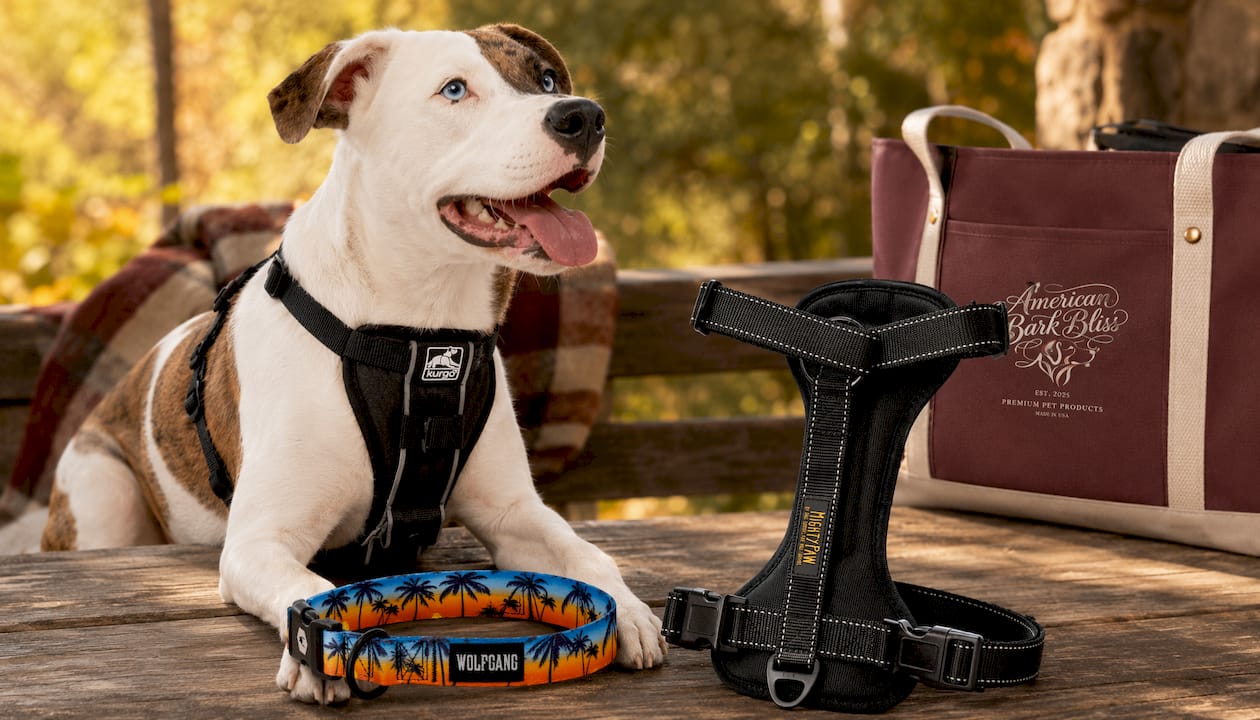
The Tru-Fit Smart Harness features reflective stitching, a quick-release buckle, and a seat belt loop for car travel. The no-pull car harness doubles as a walking harness with a front leash attachment, making it a practical choice for dogs that ride along on errands. For training-focused walks, the Wolfgang adjustable collar pairs a quick-release nylon buckle with a durable, stylish build. Quality gear is the first step toward a safer, more enjoyable walk for both of you.
FAQ
What is the safest leash length for walking a dog?
A 4–6 foot static leash gives you the best balance of control and freedom for most dogs. Retractable leashes reduce control and increase the risk of injury in traffic or crowded areas.
How do I know if pavement is too hot for my dog?
Place your hand flat on the pavement for 7 seconds. If you cannot hold it there, the surface is too hot for your dog’s paws and can cause burns in under 60 seconds.
What are the signs of heat stroke in dogs?
Heavy panting, excessive drooling, and a rapid heart rate are the primary signs. Move your dog to shade and apply cool water gradually. Never use ice-cold water, as it can worsen heat retention.
Is a harness better than a collar for walking?
A front-clip harness is safer for most dogs because it distributes pulling force across the chest rather than the throat. Collars are appropriate for dogs that walk calmly on a loose leash and do not pull.
How often should dogs be walked each day?
Most dogs benefit from 2–4 walks per day depending on breed, age, and health. Puppies and senior dogs do better with shorter, more frequent outings rather than one long walk.
Leave a comment